
Sailing Through Resistance:A Different Way to Lead Change

We have been supporting people through leading change in health and education for two and a half decades – and I cannot remember a conversation about “change management” where someone did not raise the topic of “resistance.” In almost every change, there comes a point where people begin to ask hard questions, express concerns, or push back. For leaders, that moment can feel frustrating, discouraging, and even threatening to the goals of the project.
At the Potential Group, we make a clear distinction between change management and change leadership. Change management is about organizing and tracking the practical elements of a project: project plans, communication plans, risk mitigation, timelines, budgets, and the information people need to understand what is happening. Change leadership, on the other hand, is about building energy, commitment, and momentum. It is about co-creating a shared vision, empowering champions, mobilizing people, and ensuring the change delivers the benefits it was intended to create.
We often tell leaders that we do not usually encounter resistance on projects — not because people do not have questions, concerns, or pushback, but because we do not relate to those responses as resistance. When people take issue with a change, it is often because something important to them is at stake. In that state, people have a lot of energy; it is just not yet energy for the change as it is being framed or presented.
Our job is not to push harder or persuade faster. Our job is to understand what people care about, help them connect to the purpose and value of the change, and work with them to co-design the best way to bring it to life.
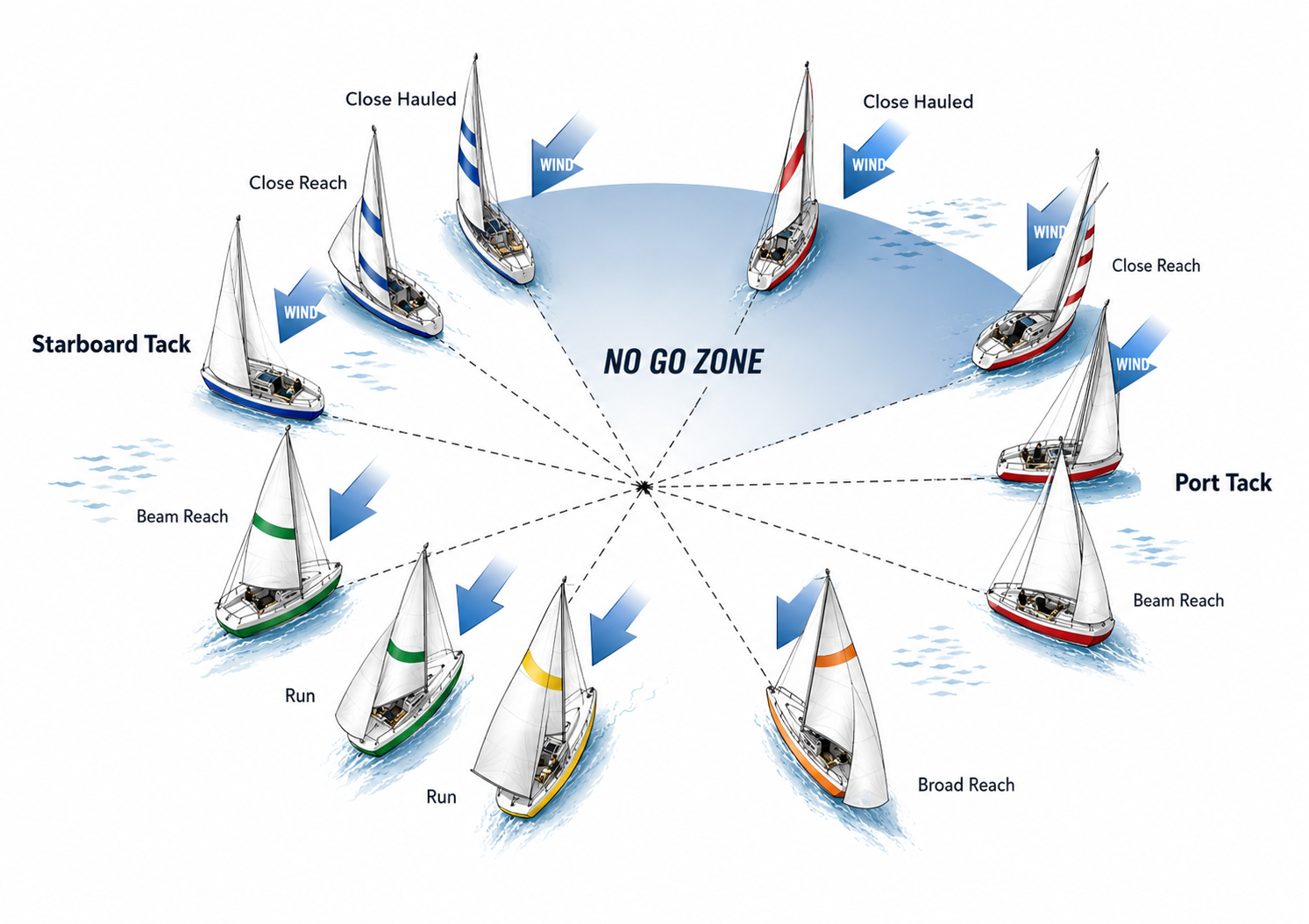
Aligned with this thinking, we have developed a new model for working with what can feel like resistance to change: the SAIL model building on a sailing metaphor. Any sailor knows you cannot sail directly into the wind. This is known as the no-go zone. When a boat is pointed straight into the wind, the wind blows across the sails and creates a condition called luffing. The boat loses momentum and can stop moving forward altogether — a state known as being in irons. The only way to move forward is to adjust direction, find a better orientation to the wind, and choose a better tack.
The same is true in change leadership. Pushing directly into resistance often creates more blowback and less movement. Instead, leaders can use the SAIL model to find a new direction while still moving toward the destination.
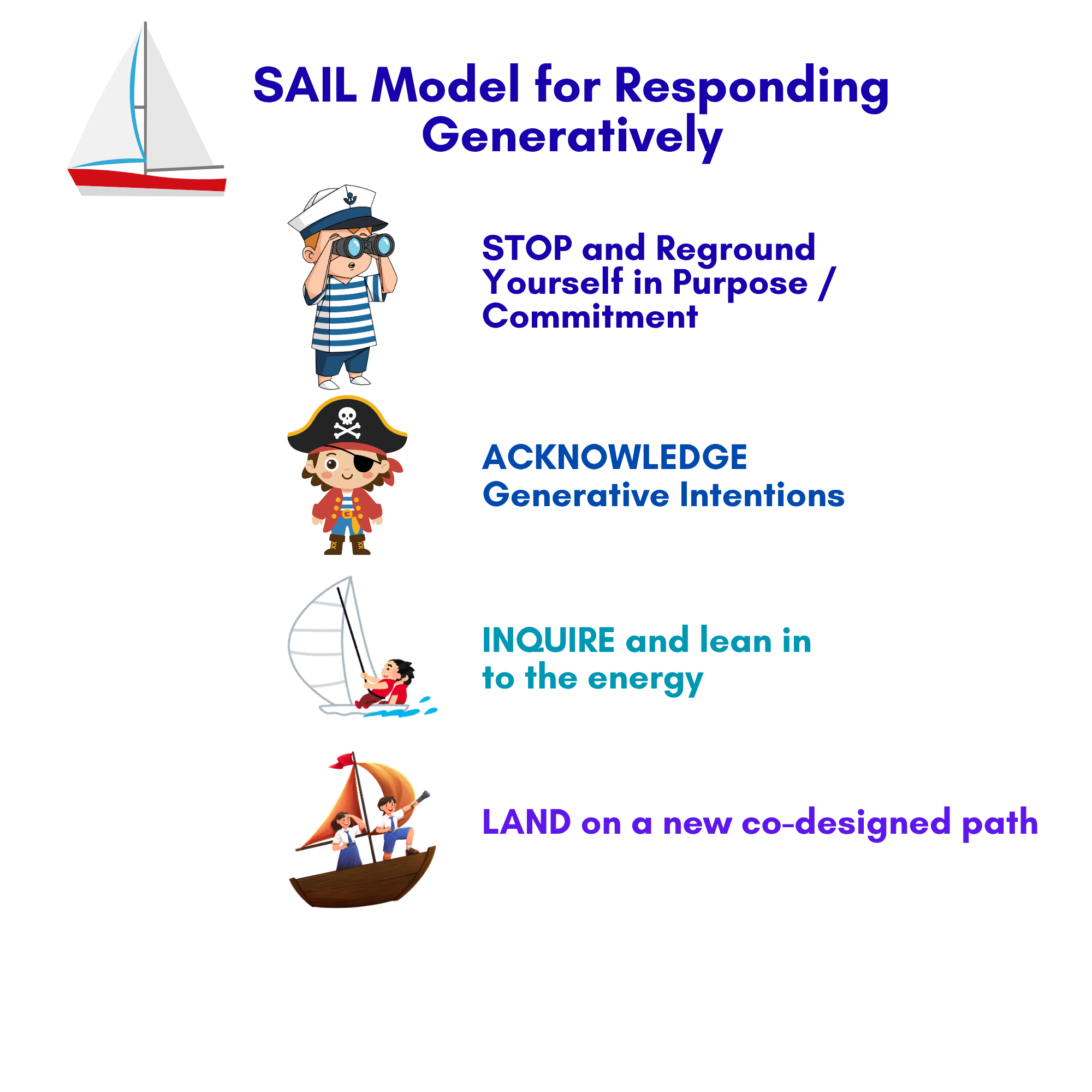
S - Stop and Reground Yourself
If you have ever been in a meeting where the energy in the room seems to turn against a project or initiative, you know how triggering it can feel. When people push back, it is easy to make it personal — to believe it says something about you, your performance, or your ability to deliver on your commitments.
In that moment, you are probably not at your most agile or creative. Your heart rate may go up. You may feel a knot in your stomach. You may feel the urge to defend, explain, or push through.
That is the moment to pause, take a breath, and reconnect with the purpose of the work. Too often, we get so focused on the project itself that we lose sight of the benefit or value it is meant to deliver. The change you are recommending likely has a meaningful purpose for clients, community members, staff, or the organization as a whole.
Regrounding yourself in that purpose gives you more flexibility. It provides an anchor for how to respond, where to inquire, and what to highlight as you engage the team.
A - Acknowledge Generative Intentions
When you encounter what feels like resistance, your first job is not to defend the plan or explain it again. It is to listen with empathy for what people care about.
People are usually pushing back for a reason that feels important to them. They may be worried about clients, workflow, quality, fairness, safety, workload, trust, or whether the change will actually achieve what it promises. Even when the response feels defensive, there is often a generative intention underneath it.
Instead of dismissing those concerns as resistance, listen deeply. Step to their side, even for a moment. Ask yourself: What are they trying to protect? What value are they naming? What might they see that I do not yet see? You may learn something important that makes the change stronger.
I - Inquire and Lean into the Energy
Once you have heard people’s concerns, begin to locate where there is energy for the change. This is how you catch the wind.
Explore what matters most to people about the intended outcomes of the project. Ask what impact they hope the change could have for end users, patients, clients, teams, or communities. Look for the places where their values connect to the purpose of the work.
This is also where co-design becomes essential. Ask what they think is possible. Listen for new ways to achieve the same goals. Invite input about what would be needed to make the change work in practice. By turning toward their energy, rather than pushing against it, you may find a better path forward.
L - Land on a New Co-Designed Path
The final move is to choose a new direction that still leads toward the destination. In sailing, changing tack does not mean giving up on where you are going. It means adjusting your path so you can keep moving.
In change leadership, this might mean reframing the purpose, adapting the implementation plan, slowing down to build readiness, engaging different champions, or redesigning parts of the solution with the people closest to the work. The destination remains clear, but the route becomes more responsive and more likely to succeed.

You will often hear us talk about our “many boats, one light” orientation to strategy and change. The purpose of the organization or project is the light, but each individual or group in the organization or system lives in their own boat and must figure out how they will move towards that light in ways that work for them and the environment they work in.
Leading change is never guaranteed to be easy. But one thing is clear: pushing change through at all costs usually limits the benefits it can achieve. Many people have experienced changes that were technically implemented but never fully adopted, sustained, or translated into the intended impact.
The next time you encounter what feels like resistance, try sailing through it differently. Stop and reground yourself. Acknowledge generative intentions. Inquire and lean in. Locate the next best tack. By listening deeply, finding energy, and adjusting direction, you may not only keep moving — you may end up reaching the destination with more commitment, creativity, and momentum than you had before.
